 Ultimate guide
Traditional Martial Arts for Physical Fitness: A Complete Guide
Quick Summary
Traditional martial arts are fighting systems rooted in a specific culture and passed down through instructors, built around forms, drills and etiquette as well as sparring. They train cardiovascular endurance, muscular endurance, flexibility, balance and coordination at the same time, so they suit people who want a full-body workout.
- Kihon drills, forms, partner work, conditioning and etiquette are the core components of most traditional schools.
- Stance holds and repeated kicks and strikes build lower-body endurance and raise heart rate.
- Beginners usually progress best with two or three sessions per week, with rest days between hard classes.
- Track attendance, perceived exertion, resting heart rate and stance hold time every four to six weeks.
- Visit a beginner class and ask how the school modifies training before committing to a school.
Table of Contents
- What Traditional Martial Arts Are and What They Cover
- How Traditional Martial Arts Build Physical Fitness
- Comparing Fitness Demands Across Traditional Styles
- Martial Arts Training for Beginners: Frequency, Progression and Benchmarks
- Using Martial Arts Workouts and Training for Weight Management
- Safety, Injury Risk and Adapting Training to Your Body
- Choosing a Traditional Martial Arts School and Starting Your Training
- Frequently Asked Questions
What Traditional Martial Arts Are and What They Cover
Last Updated: November 21, 2026
Traditional martial arts are fighting systems with roots in a specific culture, passed down through a lineage of instructors and built around forms, drills and etiquette as much as sparring.
Traditional martial arts are systems of combat technique that developed within a particular culture and were handed down through teachers rather than modern sports rules.
Most traditional schools organize training around a few core components:
- Kihon: fundamental techniques such as stances, strikes, blocks and kicks, drilled repeatedly
- Forms (kata or taolu): choreographed sequences that combine techniques into a flowing routine
- Partner work: controlled application of technique against a moving opponent
- Conditioning: stretching, calisthenics and bodyweight work that builds the physical base
- Etiquette and discipline: bowing, respect for instructors and structured class routines
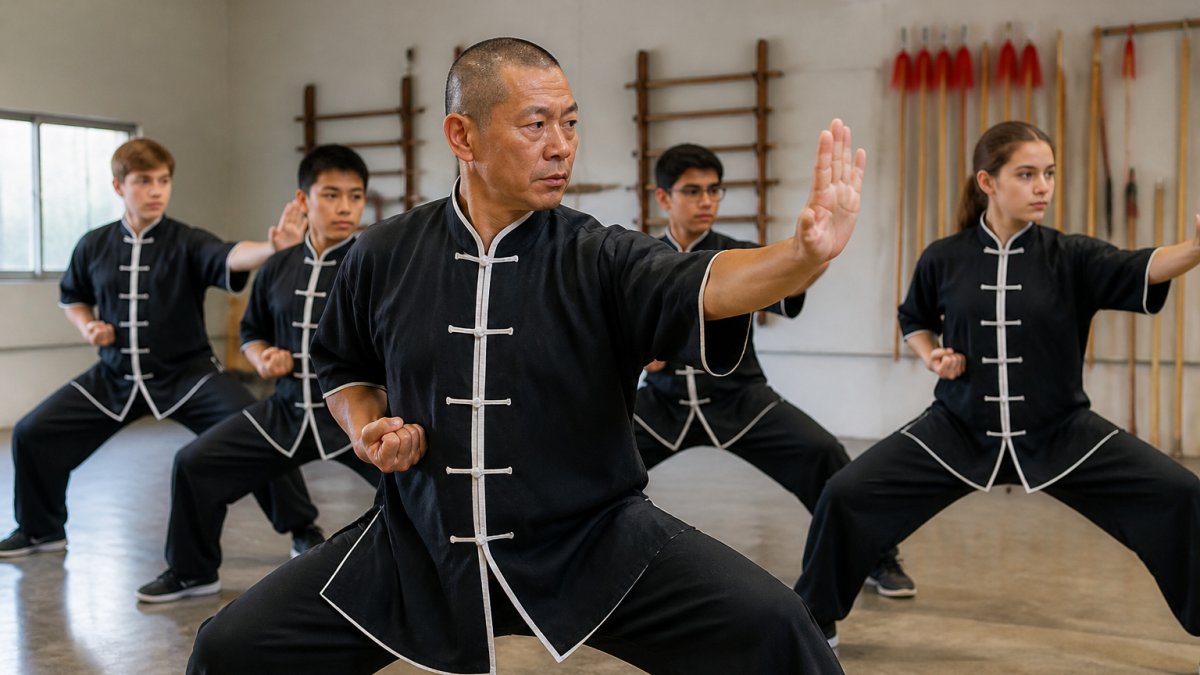
For fitness purposes, the kihon and forms portions do much of the work. Repeating a sequence of kicks and strikes for several minutes raises heart rate, while holding stances builds lower-body endurance.
How Traditional Martial Arts Build Physical Fitness
Traditional martial arts train several fitness qualities at once, which is why they appeal to people who want more than a single-purpose workout. A typical class combines aerobic work, muscular strength and endurance, and the mobility needed for controlled movement.
Cardiovascular Endurance and Stamina
Fast, continuous combinations of strikes and kicks keep the heart rate elevated for the length of a drill. Students who attend regularly may find their stamina improves over the first few months. The benefit depends on intensity: a relaxed form run-through builds less aerobic capacity than a set of timed drills performed without long rests.
Strength, Flexibility, Balance and Coordination
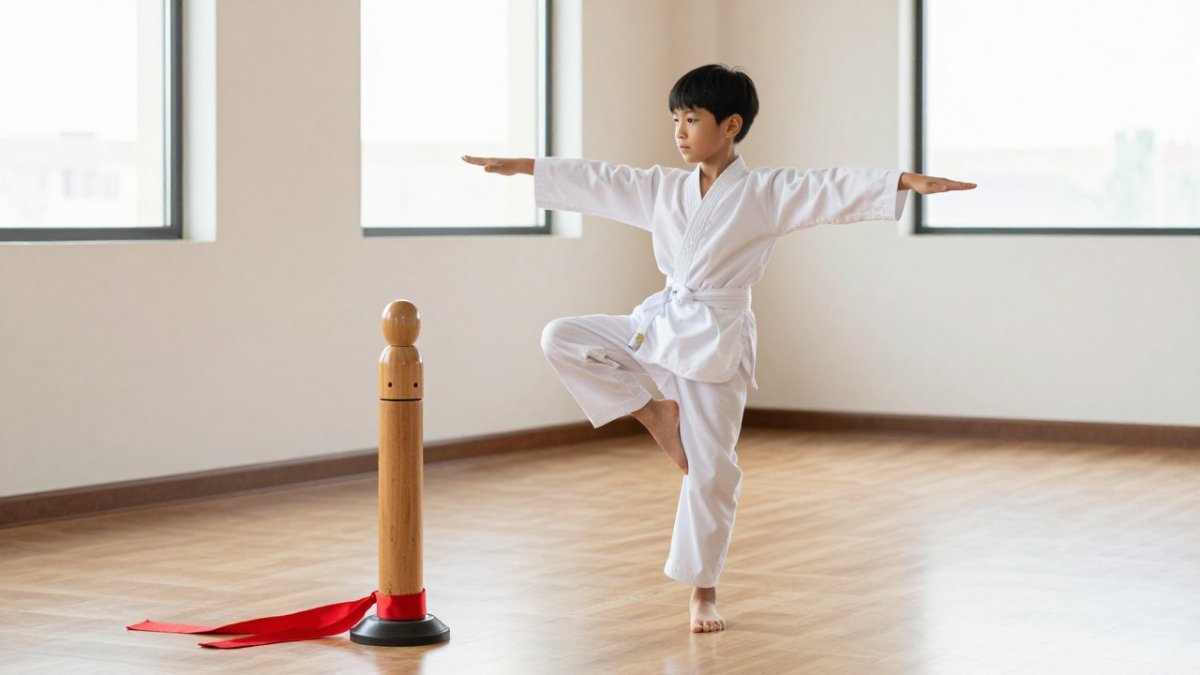
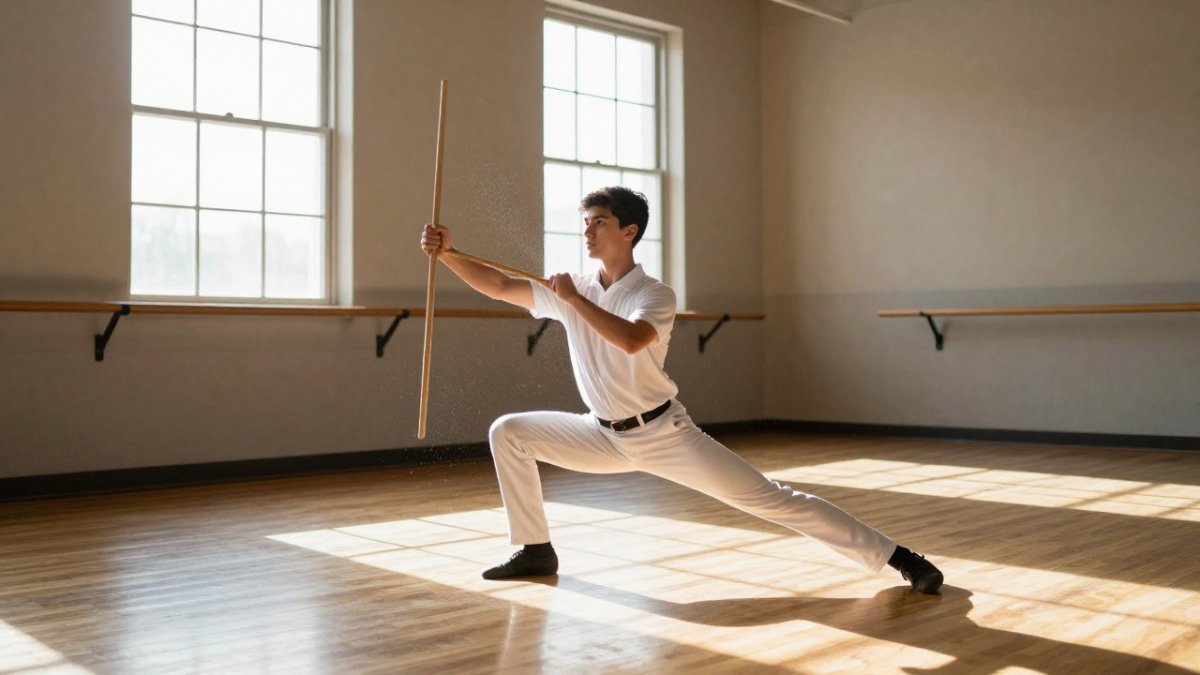
Stances such as horse stance and deep forward positions load the thighs, hips and core for extended periods, building muscular endurance rather than maximal strength. Kicks require hip flexibility, and holding a balanced stance on one leg develops stability. Coordination is trained through forms, where students must sequence arms, legs and footwork in the correct order. For practitioners who are new to exercise, these elements tend to improve together rather than separately.
Comparing Fitness Demands Across Traditional Styles
Traditional styles differ in the qualities they emphasize, so the fitness profile of a class depends on the art. Rather than treating every style as interchangeable, it helps to separate the traditional systems from modern combat sports and then compare how each traditional art loads the body. A common pattern is that stance work, kicking volume, and sparring format shape the conditioning a student receives more than the style label alone.
What Counts as a Traditional Martial Art
For this comparison, a traditional martial art is a system with cultural roots, a lineage of instructors, and a curriculum built around forms, basics, and etiquette as much as sparring. Karate, taekwondo, Kung Fu, judo, and aikido fit that description. Boxing, kickboxing, and mixed martial arts are modern combat sports with competition rules rather than lineage-based curricula, so they are useful reference points but not traditional systems. Many schools blend the two, so ask whether a program is form-centered, competition-centered, or a hybrid before you compare fitness demands.
Style-by-Style Fitness Profile
| Style | Primary Fitness Emphasis | Typical Class Demand | Best For |
|---|---|---|---|
| Karate | Stances, strikes, muscular endurance | Repetitive kihon and kata | Discipline and upper-body endurance |
| Taekwondo | Kicking, hip flexibility, jumping | High kick volume and footwork | Leg strength and flexibility |
| Kung Fu | Stances, forms, coordination | Long form sequences and stance holds | Balance, mobility and control |
| Judo | Grip strength, throws, grappling | Partner drilling and randori | Full-body strength and grip |
| Aikido | Blending, footwork, joint locks | Partner practice at controlled speed | Coordination and low-impact movement |
Karate. Traditional karate leans on deep stances, linear strikes, and kata.
Taekwondo. Traditional taekwondo emphasizes kicking height, speed, and footwork, which places a premium on hip flexibility and single-leg balance.
Kung Fu. Traditional Kung Fu varies widely by lineage, but many styles share long forms, low stances, and coordinated whole-body movement.
Aikido. Traditional aikido focuses on blending, footwork, and joint locks practiced with a partner at controlled speed.
A Practical Framework for Choosing a Style
Rather than picking a style by reputation, match it to your current fitness, goals, age, mobility, and contact preference:
- If your goal is cardiovascular fitness: favor programs with timed drills, continuous forms, or sparring intervals, such as a karate or taekwondo class run at pace.
- If your goal is strength and grip: judo's partner drilling and randori provide the most resistance-based loading.
- If your goal is balance and mobility: Kung Fu forms and aikido footwork train controlled movement with less impact.
- If you have joint limitations: ask about lower-impact alternatives, modified stances, and whether sparring is optional.
- If contact is a concern: striking arts with controlled sparring and grappling arts with supervised randori differ in contact load, so visit a class and watch how partners work.
Watch out: choosing a style by watching highlight videos can mislead you, because competition footage rarely matches the pace and contact level of a beginner class. Visit a beginner session and ask how the school modifies training for new students before you commit.
Martial Arts Training for Beginners: Frequency, Progression and Benchmarks
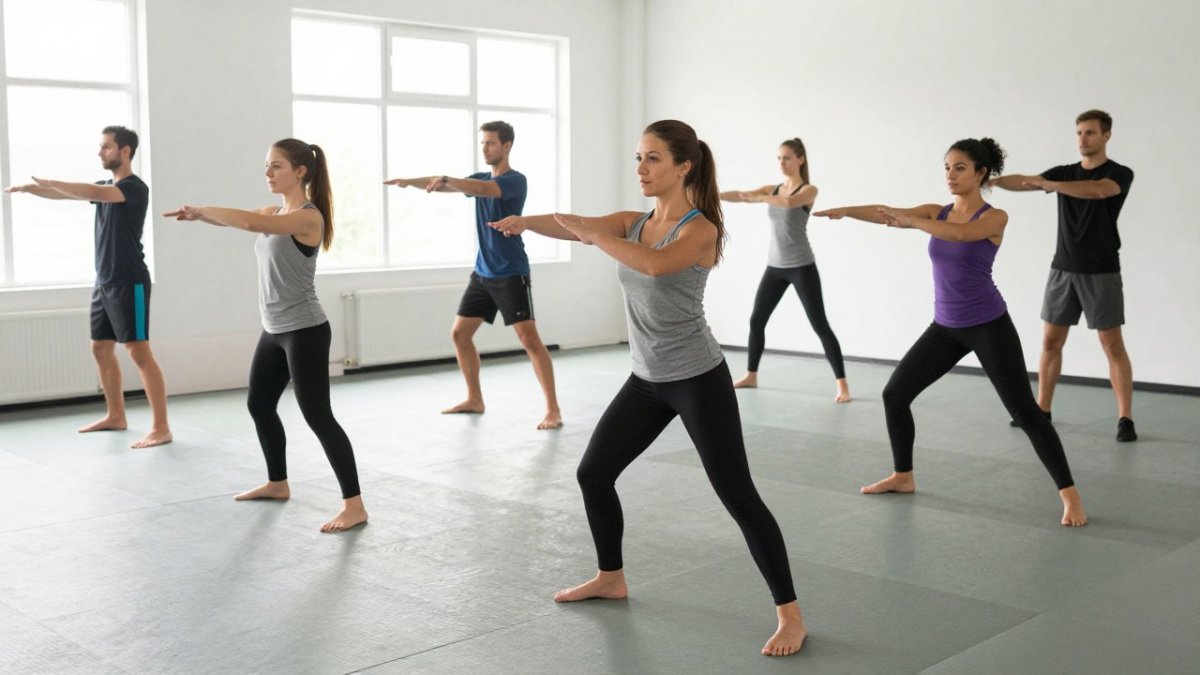
Beginners usually progress best with two or three sessions per week, combined with rest days for recovery. Early classes focus on basic stances, footwork, and simple techniques, and intensity rises as movement quality improves. The gap most guides leave is measurement: without benchmarks, beginners cannot tell whether they are progressing or simply attending. A practical plan pairs a weekly schedule with simple, repeatable tests.
A Realistic Weekly Plan
A common beginner pattern is two classes per week for the first month, adding a third class once the body adapts. On non-class days, short sessions of mobility work and light calisthenics support recovery without adding fatigue. Avoid stacking hard classes on consecutive days at the start, because stance work and kicking load the same joints repeatedly.
- Weeks 1 to 4: two classes per week, learning stances, basic strikes, and etiquette, with short sessions and extra rest.
- Months 2 to 3: add a third class and the first simple form, and begin light partner drills.
- Months 4 to 6: sustain full-class intensity, add controlled sparring if offered, and track recovery between drills.
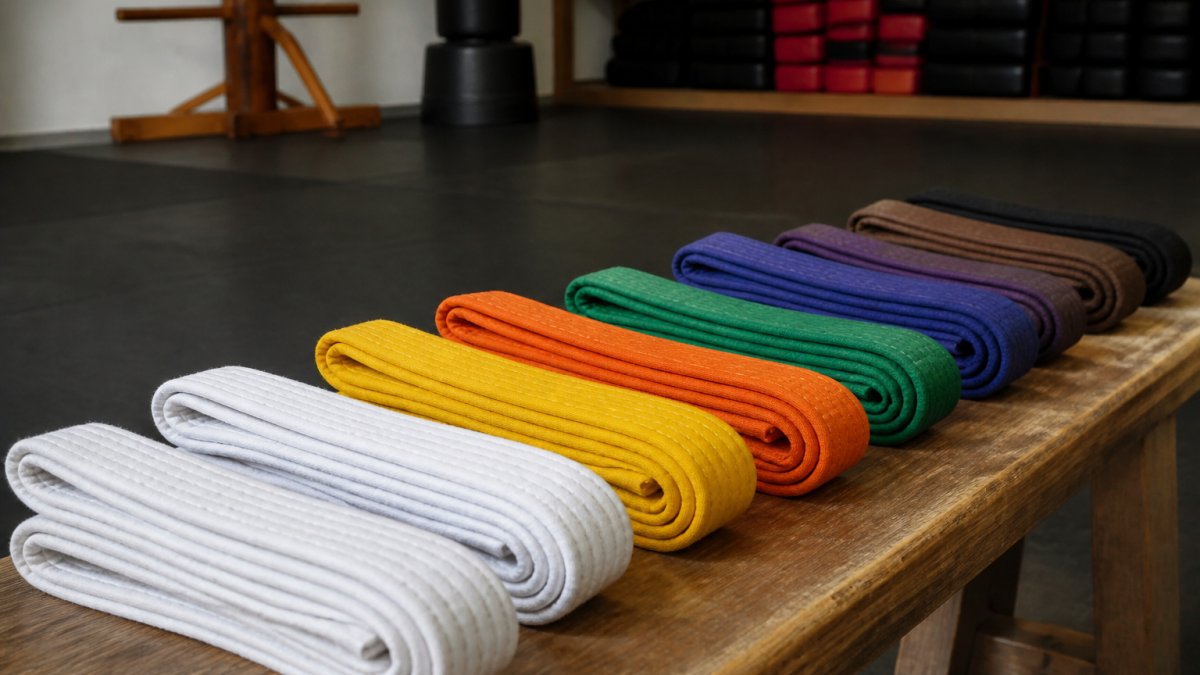
- Months 7 to 12: refine forms, improve endurance, and prepare for the first rank assessment.
These timelines are general guides. Individual pace depends on prior fitness, consistency, and the school's curriculum, so ask the instructor what benchmarks they use before you enroll.
Measurable Benchmarks to Track
You do not need a lab to track progress. A few simple markers, recorded every four to six weeks, show whether training is working:
- Attendance: count classes attended per month; consistency is the strongest predictor of early progress.
- Perceived exertion: rate each class on a 1-to-10 scale after the session. A stable rating as class content grows harder suggests improving fitness.
- Resting heart rate: measure it on waking a few times per week; a gradual downward trend is a common sign of aerobic adaptation.
- Stance hold: time how long you can hold a horse stance with good form, and compare month to month.
- Mobility test: measure kick height or a simple hip-flexor stretch reach against a wall, and note changes.
- Recovery between drills: note how quickly your breathing returns during rest periods.
Watch out: comparing your numbers to a classmate's is misleading, because age, prior training, and body proportions change what is realistic. Track your own trend line instead.
Progression and Recovery
Progression should follow movement quality, not calendar pressure. A common pattern is to increase class frequency or drill intensity only after technique holds up under fatigue. Sleep, hydration, and stretching on rest days support adaptation more than adding extra hard sessions. If a drill causes sharp joint pain, stop and ask the instructor for a modification rather than pushing through.
Using Martial Arts Workouts and Training for Weight Management
Martial arts can contribute to weight management because a vigorous class burns energy and builds lean muscle over time. However, class time alone rarely produces weight loss without attention to overall eating habits and recovery.
Two practical points help. First, the most effective sessions are the ones you attend consistently, so choose a schedule you can maintain. Second, pairing classes with stretching, sleep and balanced nutrition supports body composition changes more than the workout alone.
Safety, Injury Risk and Adapting Training to Your Body
All physical training carries some injury risk, and traditional martial arts are no exception. Kicks can strain the hips and knees, and falls or partner contact can cause sprains and bruises.
Ask any prospective school how it modifies training for students with existing injuries or joint problems.
Watch out: most beginner injuries come from kicking with poor hip alignment or from overtraining in the first month. Build volume gradually and stop any drill that causes sharp joint pain.
Choosing a Traditional Martial Arts School and Starting Your Training
Choosing a school matters as much as choosing a style. Look for clear curriculum structure, instructors with documented training backgrounds, and a class format that matches your goals, whether those are fitness, self-discipline or long-term mastery.
Other useful questions include how many students attend each class, whether the school offers trial classes, and what the tuition covers. Request current rates and contract terms directly from the school, or visit the Dragon Claw Academy website for current prices or a quote.
Start with a session, note how the instructor explains technique, and check whether the pace suits your current fitness level.
Ready to build fitness through disciplined, traditional training? Dragon Claw Academy in Flower Mound offers structured Kung Fu classes for kids, teens and adults. Contact the academy to book a trial class and ask about current tuition.
CDC guidance on adult physical activity recommendations
Frequently Asked Questions
What martial art is best for fitness?
No single art wins for every goal. Styles with continuous movement, such as karate and taekwondo, tend to build cardiovascular endurance and flexibility, while grappling-based arts emphasize strength and muscular endurance. Choose based on which fitness qualities you want most, how much contact you are comfortable with, and whether the class is consistent and well taught. A trial class is the fastest way to see whether the training pace and style fit you.
Which traditional martial arts are most physically demanding?
Physical demand depends on intensity, duration and whether a class includes sparring or conditioning drills. Styles that combine high-volume kicking, forms and conditioning often push cardiovascular and muscular endurance hardest. Grappling-based traditions demand significant strength and stamina during rolling or throws. Beginners should judge demand by how a class is structured and how instructors scale intensity, not by the style name alone.
How often should you train martial arts to improve fitness?
Most beginners see steady improvement with two to three sessions per week, with at least one day of rest between harder sessions. Track simple benchmarks such as how many minutes of continuous class you can complete, how quickly your heart rate recovers, and whether your flexibility or kicking height improves over several weeks. Progress gradually, and increase frequency only when recovery feels normal.
Can you get fit through martial arts without sparring?
Yes. Many traditional schools build fitness through forms, drills, bag work, conditioning and partner technique practice without full contact sparring. Non-contact training still develops cardiovascular endurance, strength, balance and coordination. Ask a prospective school how it structures its classes and whether sparring is optional, required or introduced gradually, since that affects both fitness outcomes and injury risk.
Are traditional martial arts a good workout for beginners?
They can be, provided the class is taught with a progression plan. Beginners benefit from structured warm-ups, basic stance and movement drills, and gradual increases in intensity. A good beginner program explains technique, scales exercises to ability and includes cool-downs. If you have joint problems or a medical condition, consult your doctor and tell the instructor before starting so that training can be modified.