 How-to
What Is the Kung Fu Belt System for Adults?
Last Updated: October 25, 2026
Quick Summary
The kung fu belt system is a structured ranking framework that marks your progress through traditional martial arts training, with each belt color representing a specific level of skill, knowledge, and commitment. Adults follow the same belt progression as younger students, progressing through seven main colors: white, yellow, orange, green, blue, brown, and black.
- The kung fu belt system progresses through seven main belt colors, each representing a distinct stage of development.
- Some kung fu schools use sashes for intermediate levels between main belt colors to provide more frequent recognition and smaller goals.
- Belt tests typically require demonstrating required forms, showing proper technique in basic movements, and sometimes sparring to prove technique application.
- Most schools estimate several years of consistent training for adults to reach black belt, depending on training frequency and individual factors.
- Consistent training three times weekly, practicing between classes, and focusing on fundamentals accelerates progression through the belt system.
Table of Contents
- Understanding the Kung Fu Belt System for Adults
- Kung Fu Belt Colors in Order and Their Meaning
- Kung Fu Sash Levels and What Sets Them Apart
- Kung Fu Belt Test Requirements for Each Rank
- How Long to Get a Black Belt in Kung Fu
- Common Mistakes Adults Make in Belt Progression
- Starting Your Kung Fu Journey at Dragon Claw Academy
- Frequently Asked Questions
Understanding the Kung Fu Belt System for Adults
The kung fu belt system is a structured ranking framework that marks your progress through traditional martial arts training. Each belt color represents a specific level of skill, knowledge, and commitment. Adults pursuing kung fu follow the same belt progression as younger students, though the timeline and expectations may differ based on individual goals and training intensity.
At Dragon Claw Academy, we use the traditional kung fu belt system to give students clear milestones. The system motivates learners and creates a shared language within our community. When you earn a new belt, you've demonstrated mastery of techniques, forms, and principles expected at that rank.
The belt progression isn't just about physical ability. It reflects your understanding of kung fu philosophy, discipline, and character development. Many adults find that the structured progression keeps them accountable and engaged over months and years of training.
Kung Fu Belt Colors in Order and Their Meaning
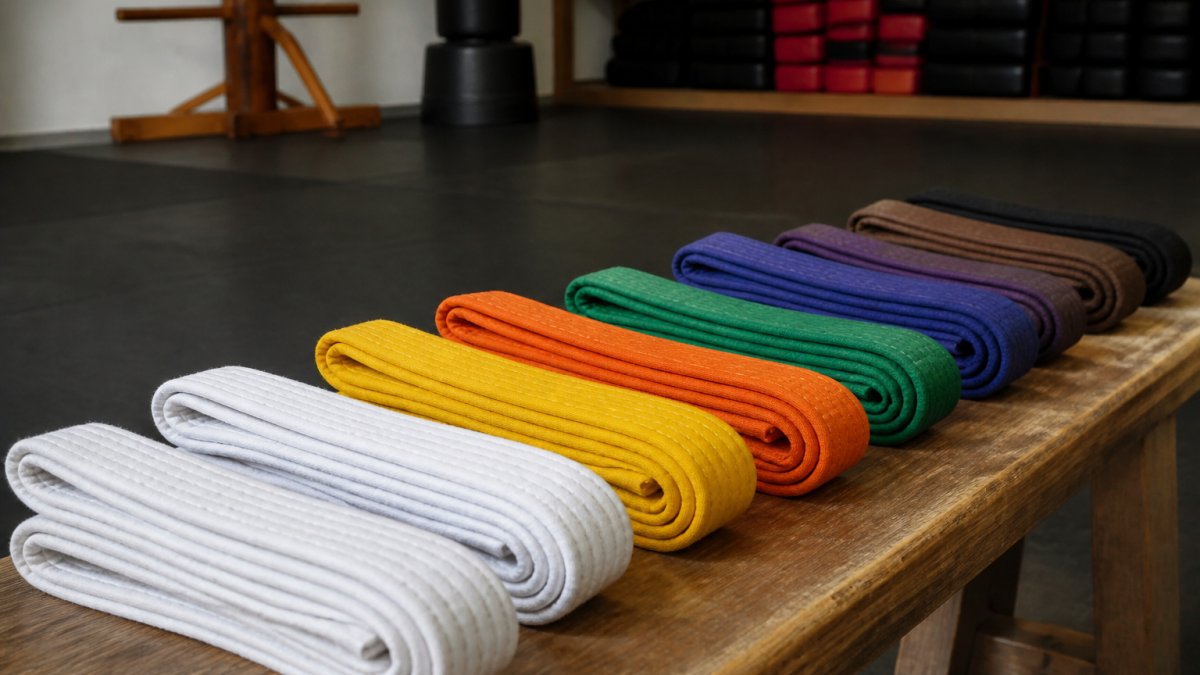
Kung fu belt colors progress from white through black, with each color marking a distinct stage of development. The order typically follows this sequence: white, yellow, orange, green, blue, brown, and black.
White belt represents the beginning. You're learning foundational stances, basic hand techniques, and the principles of proper breathing. White belt students focus on building body awareness and understanding how movements connect to kung fu philosophy.
Yellow belt marks your first advancement. You've grasped fundamental techniques and can execute basic forms with control. At this level, you begin linking movements into sequences and understanding the flow of energy in kung fu.
Orange belt shows developing competence. Your forms become smoother. You start learning intermediate techniques and begin sparring with controlled contact.
Green belt indicates solid progress. You understand multiple forms and can apply techniques in different contexts. Green belt students typically train with greater independence and help newer students.
Blue belt represents an intermediate level of mastery. You've spent significant time developing speed, power, and precision. Blue belt techniques are more advanced, and you begin understanding deeper philosophical aspects of kung fu.
Brown belt signals you're near mastery. Your forms are polished. You demonstrate strong technical ability and often assist instructors during classes. Brown belt students embody the discipline and focus that kung fu demands.
Black belt is the highest rank in most kung fu systems. Earning black belt means you've achieved technical proficiency, deep understanding of kung fu principles, and demonstrated the character qualities the art emphasizes.
The kung fu belt system progresses through seven main colors, each representing a distinct stage of development and skill.
| Belt Color | Stage | Key Focus |
|---|---|---|
| White | Beginning | Foundational stances and basic hand techniques |
| Yellow | First advancement | Fundamental techniques and basic forms |
| Orange | Developing competence | Smoother forms and intermediate techniques |
| Green | Solid progress | Multiple forms and technique application |
| Blue | Intermediate mastery | Advanced techniques and philosophy |
| Brown | Near mastery | Polished forms and strong technical ability |
| Black | Highest rank | Technical proficiency and deep understanding |
Kung Fu Sash Levels and What Sets Them Apart
Some kung fu schools use sashes instead of belts, and the distinction matters. A sash is typically worn around the waist like a belt but signals a slightly different ranking system. Many traditional schools use sashes for intermediate levels between main belt colors.
Sash levels break the progression into smaller steps. Instead of moving directly from white to yellow, you might earn a white-yellow sash first. This approach gives students more frequent recognition and smaller, achievable goals.
The advantage of sash levels is clear: they maintain motivation. Adults juggling work and family responsibilities benefit from recognizing progress every few months rather than waiting a year or more between belt tests. Sash progression also allows instructors to fine-tune advancement based on individual readiness.
What sets sash levels apart from full belts is the depth of requirement. A sash test typically requires demonstrating proficiency in fewer forms or techniques than a full belt test. The progression is gentler but still rigorous.
At Dragon Claw Academy, our kung fu sash levels provide a clear path forward. Students see steady progress and understand exactly what skills they need to develop before the next test. This structured approach builds confidence and keeps adult learners engaged over the long term.
Kung Fu Belt Test Requirements for Each Rank
Earning a new belt requires passing a test. Each test evaluates your technical skill, understanding of forms, and readiness to progress. Kung fu belt test requirements vary by school but typically include these elements: demonstrating required forms, showing proper technique in basic movements, and sometimes sparring to prove you can apply techniques under pressure.
White to yellow tests focus on fundamentals. You'll demonstrate basic stances, hand strikes, and blocks. Instructors watch for proper form, balance, and understanding of basic principles. Most students pass this level with consistent training.
Yellow to orange tests add complexity. You'll perform longer forms and show more refined technique. Instructors evaluate your ability to transition smoothly between movements. You might also demonstrate self-defense applications of the techniques you've learned.
Orange to green tests require stronger forms and faster execution. You'll show improved power and control. Sparring often becomes part of the test at this level, requiring you to apply techniques against a partner with appropriate contact.
Green to blue tests demand technical excellence. Forms must be performed with speed, precision, and power. You'll demonstrate multiple forms, possibly including weapons forms. Understanding kung fu philosophy becomes more important at this level.
Blue to brown tests evaluate near-mastery. You'll perform advanced forms and show sophisticated technique. Teaching ability sometimes becomes part of the evaluation, can you explain techniques to others?
Brown to black tests are comprehensive. You'll demonstrate all forms learned throughout your training. You'll show mastery of basic and advanced techniques. Many schools require a written component testing your knowledge of kung fu history and philosophy. The black belt test often takes several hours and represents months of preparation.
How Long to Get a Black Belt in Kung Fu
How long to get a black belt in kung fu depends on training frequency, your starting point, and the specific school's requirements. Most schools estimate several years of consistent training for adults to reach black belt.
Adults who train more frequently might reach black belt faster. Those training once per week will likely need more time. The timeline reflects the depth of knowledge and skill required.
Individual factors matter significantly. Your athletic background, natural coordination, and age all influence progression speed. An adult coming from another martial art might advance faster than someone with no martial arts experience.
The kung fu belt system doesn't rush students. Faster progression doesn't mean better learning. Many instructors intentionally slow advancement for students who show technical gaps.
At Dragon Claw Academy, we emphasize quality over speed. Your instructor will guide your progression based on your readiness, not arbitrary timelines. Some students reach black belt faster. Others take longer. Both paths are valid.
Common Mistakes Adults Make in Belt Progression
Adults often make predictable errors that slow their advancement. Understanding these mistakes helps you avoid them.
Comparing yourself to younger students is the first mistake. Your journey as an adult is different. Focus on your own development, not someone else's timeline.
Neglecting fundamentals happens when students rush to learn advanced techniques. The foundation, basic stances, hand techniques, footwork, must be solid. Every advanced technique builds on these basics. Spending extra time on fundamentals actually accelerates your long-term progress.
Skipping practice between classes severely limits advancement. Class time is where you learn. Practice time is where you develop mastery. Adults who train twice weekly in class but don't practice at home progress slowly. Adding 20 minutes of daily practice transforms your development.
Inconsistent attendance disrupts your learning. Missing weeks between classes means relearning what you forgot. The kung fu belt system rewards consistency. Training three times weekly consistently beats training five times weekly with long gaps.
Training through injury rather than modifying movements causes real damage. Tell your instructor about joint issues or limitations. Good instructors modify techniques so you stay safe while continuing to develop strength and skill.
Focusing only on forms and ignoring philosophy limits your understanding. Kung fu isn't just physical movement. Understanding the principles behind techniques deepens your practice and accelerates advancement.
Starting Your Kung Fu Journey at Dragon Claw Academy
Beginning kung fu as an adult feels intimidating. You might worry about being the oldest student or fear you lack athleticism. These concerns are normal. Most adults discover that kung fu welcomes beginners of all ages.
At Dragon Claw Academy, our adult programs are specifically designed for your needs. We understand that adults have different schedules, physical considerations, and learning styles than younger students. Our instructors have extensive experience working with adult beginners.
The first step is simple: attend a class. You'll wear comfortable clothing, no special uniform needed for your first session. Our instructors will show you basic stances and movements. You'll start learning immediately, and you'll see why the kung fu belt system motivates students to continue training.
Your progression through the kung fu belt system depends on your commitment. Training consistently, practicing between classes, and staying focused on fundamentals will move you forward steadily. Many adults find that the structured progression keeps them engaged for years.
The journey from white belt to black belt transforms more than your physical ability. You'll develop discipline, confidence, and resilience. You'll join a community of people committed to personal growth through martial arts.
Starting kung fu as an adult is entirely achievable. The kung fu belt system provides a clear path forward, and consistent training produces measurable progress. Dragon Claw Academy's experienced instructors guide adult students through this progression with programs tailored to your needs. Our structured, traditional approach to kung fu training builds both physical skill and character. Begin your journey today and discover how martial arts training develops the discipline and confidence that extends far beyond the training floor.
Frequently Asked Questions
Does Kung Fu have a belt system?
Yes, the kung fu belt system is a structured ranking system used by many schools to mark student progress and achievement. Unlike some martial arts that use only belts, traditional Kung Fu often combines belts with sashes to represent different skill levels. The system provides clear goals and milestones for students, helping them stay motivated and track their advancement through organized ranks.
What are the Kung Fu belt colors in order?
Most traditional Kung Fu schools follow a progression starting with white (beginner) and advancing through yellow, orange, green, blue, brown, and finally black. The specific kung fu belt colors in order may vary slightly between schools, but the general progression moves from lighter to darker colors, with white representing a blank slate and black representing mastery and expertise in the art.
How long does it take to earn a black belt in Kung Fu?
The time to earn a black belt varies based on training frequency, dedication, and the specific school's requirements. Most adults training consistently can expect the journey to take several years. Advancement depends on mastering techniques, demonstrating proper form, understanding philosophy, and passing rank tests rather than time alone. Attending regular classes and practicing outside of sessions speeds up progress.
What skills do adults need to advance in Kung Fu?
As you progress through the kung fu belt system, you'll need to develop stronger forms, more complex techniques, better balance and flexibility, and deeper understanding of martial arts philosophy. Each rank typically requires demonstrating proficiency in specific movements, combinations, and applications. You'll also need to show improvement in focus, discipline, and the ability to teach or mentor newer students at higher levels.