 blog
How to Build Strength and Discipline Through Traditional Kung Fu
Last Updated: October 26, 2026
Quick Summary
Traditional kung fu training builds functional strength, mental clarity, and self-defense skills by combining physical conditioning with disciplined form practice and mind-body connection. Adults typically notice improved core stability, better balance and coordination, reduced stress, and increased cardiovascular endurance within weeks of consistent practice.
- Train three to four times per week for optimal results, allowing recovery between sessions while building consistent habit
- Form practice improves focus and concentration by demanding full present-moment attention, reducing mental clutter and rumination
- Balance training through stance work is especially valuable for adults over 40, as it reduces fall risk and maintains neuroplasticity
- Partner drills and shared milestones create genuine community connection, providing accountability and mentorship that keeps practitioners training for years
- Cardiovascular endurance improves through interval-style training that combines intense movements with controlled transitions
Table of Contents
- Why Traditional Kung Fu Training Stands Apart
- Building Functional Strength and Core Stability
- Kung Fu for Beginners Adults: Developing Coordination and Balance
- Mental Clarity and Cognitive Function Through Form Practice
- Kung Fu for Fitness: Cardiovascular Endurance and Stamina
- Kung Fu for Self-Defense: Practical Combat Skills and Confidence
- Stress Reduction, Discipline, and Community Connection
- Structuring Your Kung Fu Training Schedule
- Frequently Asked Questions
Why Traditional Kung Fu Training Stands Apart
Traditional kung fu training offers something most fitness routines don't: a structured path that builds body and mind together.
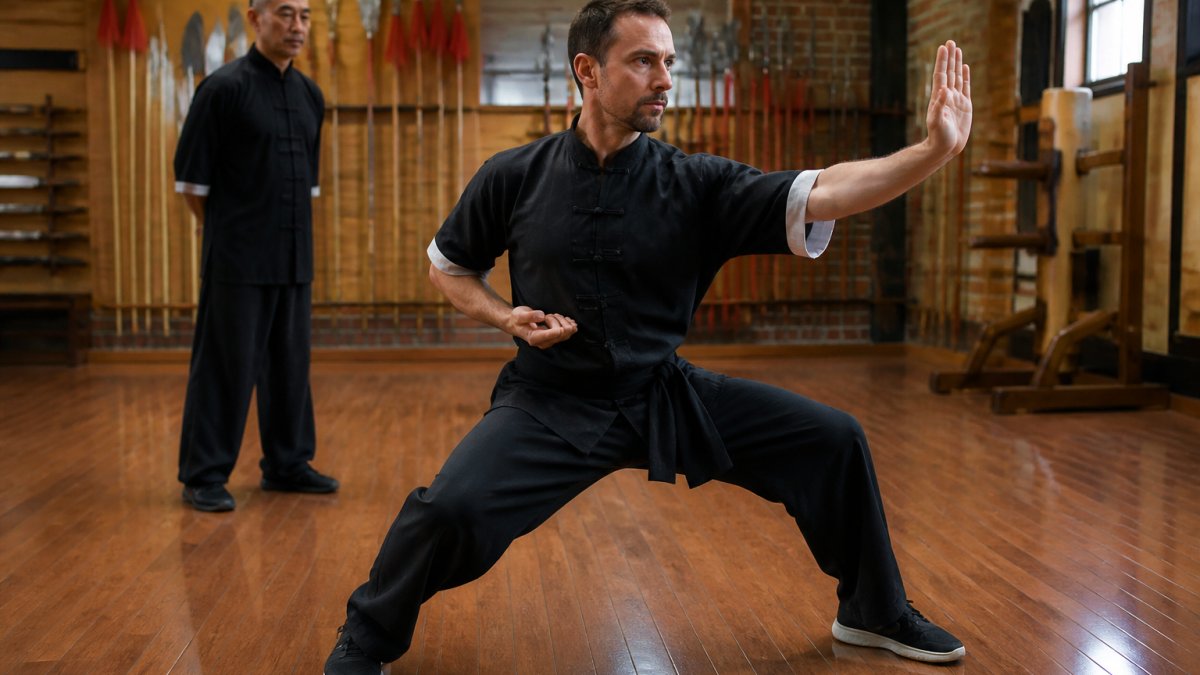
At Dragon Claw Academy, adults discover kung fu fills gaps other activities leave open. You get stronger and develop focus; you learn to defend yourself and build confidence that carries into your career and relationships.
What makes traditional kung fu different is the emphasis on form practice and mind-body connection. Every movement has purpose, every breath matters. This isn't about trophies, it's about mastery.
Many adults come expecting one thing and gain several. The physical transformation is obvious, but the mental clarity, stress relief, and community often surprise people most.
Building Functional Strength and Core Stability
Traditional kung fu develops functional strength that helps you move better in daily life.
Kung fu forms demand core stability from start to finish, every stance engages your midsection, every punch or kick originates from your center. Over weeks and months, your core becomes noticeably stronger.
This differs from gym strength: you're not isolating muscles but training movement patterns, with legs, core, arms, and back working as a system. That integration makes kung fu effective for real-world strength.
Key areas that strengthen:
- Lower back and lumbar spine stability
- Abdominal muscles and obliques
- Hip flexors and glute activation
- Shoulder stability and rotator cuff strength
- Ankle and foot proprioception
Stronger muscles also mean better joint health: joints stay mobile while supporting muscles grow stronger, reducing wear and tear over time.
Kung Fu for Beginners Adults: Developing Coordination and Balance
Coordination improves faster than most adults expect, for neurological rather than muscular reasons. Learning a new stance builds and refines a motor map through repeated practice and correction. Beginners typically notice cleaner movement within the first month, not from dramatic muscle change, but because their nervous system recruits the right muscles in the right order.
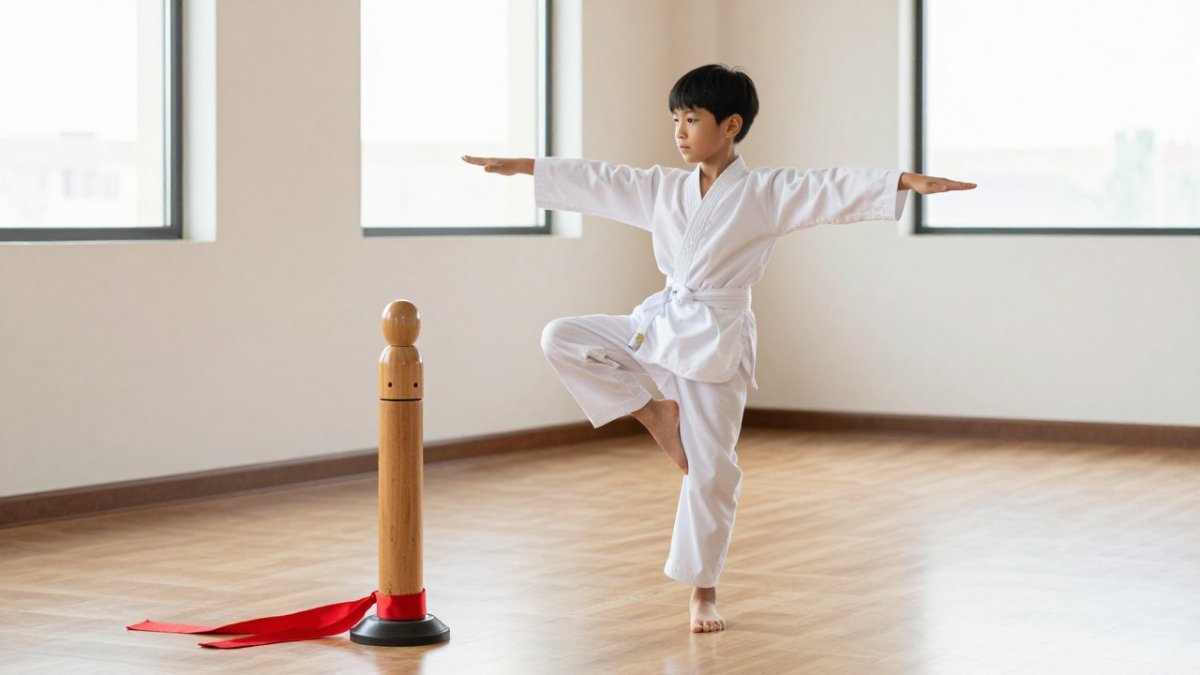
Balance training is built into every stance: horse stance trains lateral stability and hip strength, bow stance trains front-to-back weight transfer, and cat stance trains single-leg control and ankle stability. Vestibular input, proprioceptors, and vision all feed the same balancing loop, and each new stance forces it to recalibrate.
How balance improves, mechanically:
- Proprioception sharpens, your sense of where your limbs are in space becomes more precise.
- Ankle and foot muscles strengthen, giving you a faster corrective response when you start to tip.
- Neural pathways between brain and muscle become more efficient, shortening reaction time.
- Weight-transfer drills teach you to move your center of mass deliberately rather than catching yourself after the fact.
Why this matters more after 40
This is where traditional kung fu diverges from generic fitness advice. Balance decline is one of the clearest markers of aging, and falls are a leading cause of injury among older adults in the United States, the Centers for Disease Control and Prevention reports that millions of adults 65 and older fall each year, and falls are a leading cause of injury-related death in that group (the CDC).
Neuroplasticity, the brain's ability to form new neural connections, remains active throughout adulthood (Exploring the Role of Neuroplasticity in Development, Aging, and Neurodegeneration). What changes with age is the rate and repetition required, not the capacity. Kung fu suits this because it is inherently progressive: forms are learned in layers, revisiting known material while adding small increments of difficulty, a near-ideal format for adult motor learning.
Coordination is about control, not looking smooth. When body and mind work together precisely, you move with intention, waste less energy, and reduce injury risk. For adults, better balance, faster reaction time, and more efficient movement are the difference between staying active for decades and getting sidelined by a preventable fall or strain.
Mental Clarity and Cognitive Function Through Form Practice
Form practice is meditation in motion. Executing a kung fu form leaves your mind nowhere to hide, you can't dwell on work stress or tomorrow's meeting. Your full attention is on the present moment.
This focused attention has measurable effects: regular form practice improves concentration, memory, and mental clarity. Your brain gets a workout alongside your body.
The meditative state also reduces mental clutter.
Cognitive benefits from form practice:
- Enhanced focus and concentration
- Improved memory retention
- Better problem-solving ability
- Reduced mental fatigue
- Increased awareness of your own thought patterns
Traditional kung fu training engages your prefrontal cortex, the part of your brain responsible for planning, decision-making, and impulse control. Consistent practice strengthens these neural pathways.
Kung Fu for Fitness: Cardiovascular Endurance and Stamina
Kung fu is a full-body cardiovascular workout: a single form can elevate your heart rate significantly and keep it elevated. Over time, cardiovascular endurance improves substantially.
Kung fu for fitness differs from running or cycling because it combines cardio with strength and flexibility, you build endurance while developing coordination, power, and technique.
The interval nature of kung fu training, intense movements alternating with controlled transitions, creates an effective cardio stimulus. Your heart adapts, lung capacity expands, and your body delivers oxygen to working muscles more efficiently.
Stamina improvements you'll notice:
- Climbing stairs feels easier
- You recover faster from physical exertion
- Your resting heart rate decreases
- You have more energy throughout the day
- Physical tasks that once tired you feel manageable
Consistent training builds stamina progressively, no sprinting or marathons required. Regular kung fu practice conditions your cardiovascular system effectively.
Kung Fu for Self-Defense: Practical Combat Skills and Confidence
Kung fu for self-defense teaches practical techniques that work, but more importantly it builds the confidence of knowing you can handle yourself, and that changes how you move through the world.
Self-defense training covers strikes, blocks, and footwork, but the real benefit is psychological.
Confidence from self-defense training extends beyond confrontation: you stand taller, make eye contact, and project composure, which often prevents conflicts before they start.
What practical self-defense training includes:
- Awareness of your surroundings
- Recognition of potential threats
- Effective striking and blocking techniques
- Escape strategies for dangerous situations
- Situational decision-making under stress
The discipline required to learn self-defense also teaches respect for power: real strength means restraint, and that mindset prevents unnecessary confrontation.
Stress Reduction, Discipline, and Community Connection
Stress reduction in kung fu follows a predictable physiological sequence. Hard form work and partner drills raise your heart rate into a moderate-to-vigorous zone, triggering endorphins that produce the post-training calm most practitioners describe. Meanwhile, the narrow attentional demand of form practice, tracking breath, stance, and sequence at once, crowds out rumination. You cannot rehearse tomorrow's meeting while holding a low horse stance and coordinating a palm strike.
The downstream effects show up in sleep: consistent trainees often fall asleep faster and wake less, because structured exertion and reduced evening rumination both support sleep onset.
Discipline is the second layer, built through repetition rather than willpower. Showing up on a rainy Tuesday when you're tired is the actual training. Over months the habit generalizes: practitioners report better follow-through at work, more consistent exercise outside the studio, and a lower tolerance for their own excuses. Discipline is a byproduct of the schedule, not a prerequisite.
The community benefit competitors overlook
Most articles treat social connection as a footnote. For adults, it may be the most valuable part of training. Loneliness among American adults is a recognized public-health concern, the U.S.
That makes the studio a genuine "third place", neither home nor work, where you're known by name and expected to show up. Unlike a gym, where headphones and solo machines keep people apart, kung fu requires interaction.
What the community actually provides:
- Accountability: training partners notice when you miss class, and that mild social pressure keeps attendance steady.
- Mentorship: senior students correct your form in real time, which accelerates learning faster than solo practice.
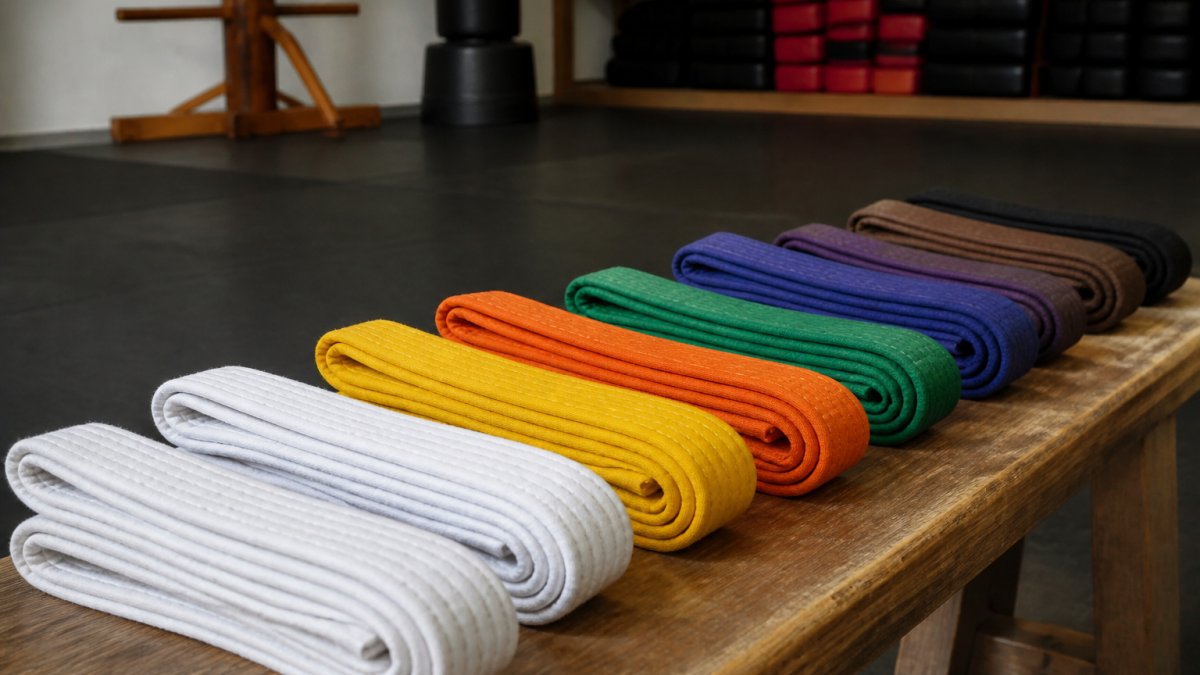
- Shared milestones: belt and form advancement are collective events, not private achievements.
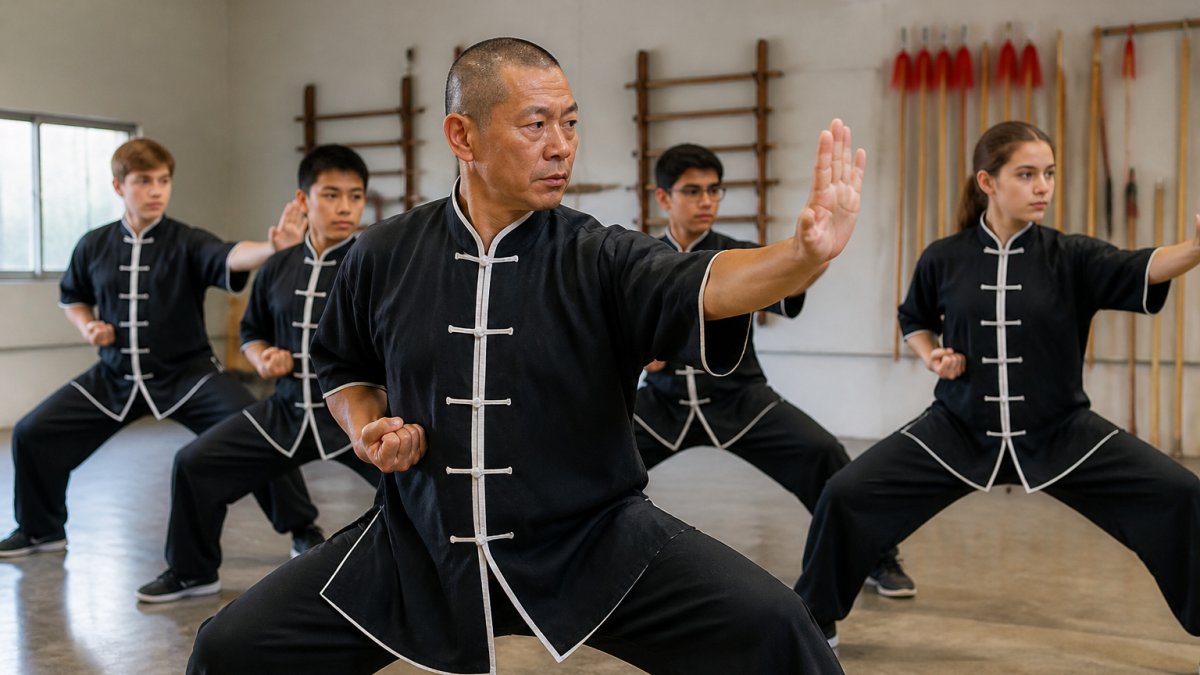
- Intergenerational contact: adult classes often mix ages and backgrounds, which broadens your social circle beyond your usual demographic.
Dragon Claw Academy treats the community as part of the curriculum rather than a side effect.
Traditional kung fu training delivers measurable benefits across physical, mental, and social dimensions.
| Benefit | How It Works | What You Notice |
|---|---|---|
| Stress reduction | Hard training triggers endorphins; form focus crowds out rumination | Calmer mood, better sleep |
| Cardiovascular endurance | Interval training elevates heart rate sustainably | Stairs feel easier, faster recovery |
| Core strength | Every stance and movement engages midsection | Better posture, reduced injury risk |
| Balance and coordination | Repeated stance practice refines motor pathways | Cleaner movement within first month |
| Mental clarity | Form practice demands full present-moment attention | Enhanced focus and problem-solving |
| Self-defense confidence | Trained responses keep nervous system calm under pressure | Stand taller, project composure |
| Community connection | Regular partner drills and shared milestones build friendship | Accountability, mentorship, belonging |
Structuring Your Kung Fu Training Schedule
Consistency matters more than intensity: training three times per week beats one intense weekly session. Your body adapts to regular stimulus, and your mind builds the habit.
Most adults benefit from a schedule allowing recovery between sessions.
Sample training schedule for adults:
- Monday: Kung fu class (form and technique focus)
- Wednesday: Kung fu class (application and conditioning)
- Friday: Kung fu class (review and advancement)
- Weekend: Optional light practice or rest
Kung fu for beginners adults means learning fundamentals thoroughly before advancing. Rushing this phase leads to injury and frustration; building proper technique prevents problems later.
Progress isn't linear: some weeks you'll feel strong, others you'll plateau. That's normal, consistency through plateaus is where real growth happens.
Dragon Claw Academy structures programs specifically for adults, who have different needs than children.
A realistic long-term goal maintains motivation.
Starting traditional kung fu training as an adult is one of the most rewarding decisions you can make.
Dragon Claw Academy offers structured programs designed specifically for adults seeking authentic traditional kung fu training.
Frequently Asked Questions
What are the main benefits of traditional kung fu training for adults?
Traditional kung fu training delivers seven key benefits: functional strength and core stability, improved balance and coordination, enhanced mental clarity and cognitive function, reduced stress and cortisol levels, practical self-defense proficiency, cardiovascular endurance, and discipline. Adults see improvements in physical fitness, focus, and confidence within weeks of consistent practice. The mind-body connection developed through form practice translates to better stress management and mental resilience in daily life.
Can adults learn kung fu for beginners with no prior martial arts experience?
Yes. Structured programs designed for kung fu for beginners adults teach fundamentals progressively, starting with basic stances, footwork, and breathing techniques. Instructors modify movements based on individual joint mobility and fitness levels. Most adults see noticeable improvements in coordination, balance, and body mechanics within 4-6 weeks. The key is consistent training, even two to three sessions weekly produces measurable results in strength, flexibility, and motor skills development.
How does kung fu training help with stress management and mental focus?
Form practice in traditional kung fu requires sustained mental concentration, which activates the prefrontal cortex. The meditative aspects of repetitive, flowing movements calm the nervous system similar to breathing techniques used in mindfulness. Adults report improved mental clarity, better sleep, and reduced anxiety after regular training. The discipline required builds resilience and emotional regulation that extends beyond the studio into work and personal relationships.
Is kung fu effective for self-defense, and how practical is the training?
Kung fu for self-defense provides combat conditioning and spatial awareness through realistic scenario training. Traditional techniques develop practical fighting distance, timing, and defensive positioning. Adults learn to recognize threats, control distance, and execute effective strikes and blocks. The self-defense proficiency gained is grounded in centuries of martial application, not just sport technique. Many practitioners report increased confidence in daily situations, which itself acts as a deterrent.