 How-to
How to Help an ADHD Child Focus at Home: 7 Steps
Table of Contents
- Step 1: Set Up a Sensory-Friendly Homework Space
- Step 2: Use ADHD Homework Help Tips That Break Tasks Down
- Step 3: Build Physical Activity and ADHD Focus Into the Day
- Step 4: Try Martial Arts for ADHD Focus Training
- Step 5: Manage Screen Time and Digital Distractions
- Step 6: Protect Sleep and Daily Routines
- Step 7: Use Positive Reinforcement and Collaborative Goal Setting
- Common Mistakes Parents Make When Helping an ADHD Child Focus
- Frequently Asked Questions
Last Updated: September 27, 2026
Step 1: Set Up a Sensory-Friendly Homework Space
The best place to start when you want to help an ADHD child focus at home is the room itself. A sensory-friendly homework space reduces distractions before they start. It gives your child's brain fewer things to fight.
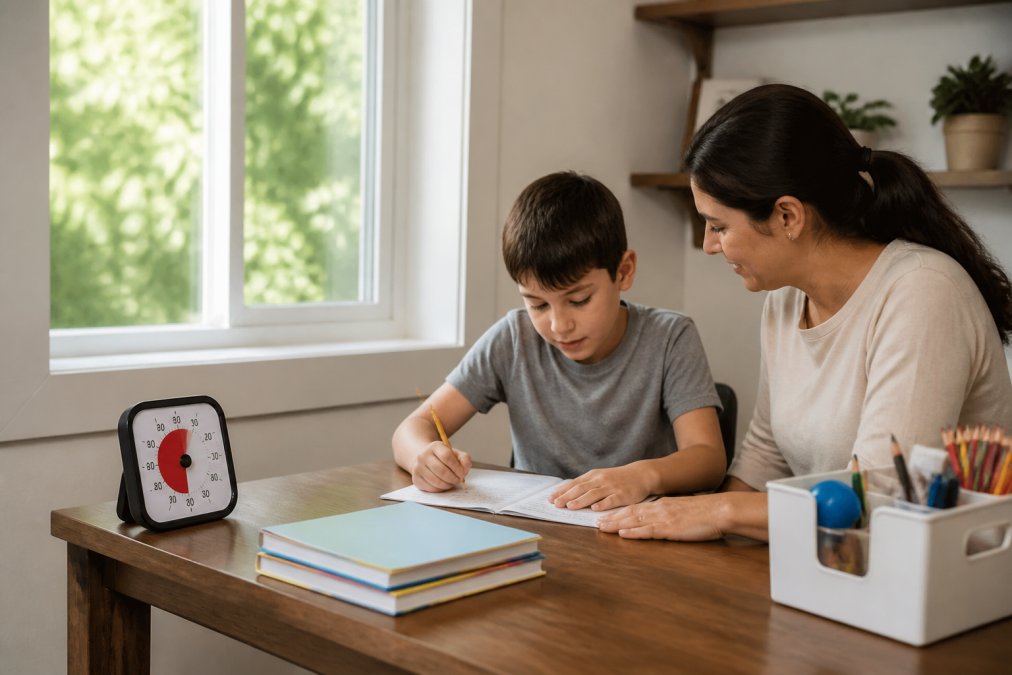
What to Remove From the Room
A distraction-free environment matters more for kids with ADHD than for most. A common mistake is leaving the bedroom full of toys, screens, and noise.
Try removing these first:
- Phones and tablets from arm's reach
- Loud clocks or ticking timers
- Cluttered piles of paper and books
- Bright, busy posters near the desk
- Open windows facing a busy street
What to Add Instead
Small changes help a lot. Many parents find that simple tools support self-regulation.
- A quiet corner with soft lighting
- A visual schedule taped to the wall
- A wobble cushion or resistance band for the chair
- Noise-canceling headphones if sounds distract
- One clear bin for supplies
Step 2: Use ADHD Homework Help Tips That Break Tasks Down
ADHD homework help tips work best when they shrink big tasks into small ones. Kids with ADHD often struggle with task initiation and working memory. A giant assignment feels impossible, not because the child is lazy, but because the brain can't hold the whole thing in mind at once.
Chunking Assignments Into Manageable Steps
Chunking means splitting work into short, clear pieces. Each piece should feel doable in one sitting, often 10 to 15 minutes of work for elementary-age kids, and 20 to 30 minutes for teens.
- Write the full assignment on one line at the top of the page.
- Split it into 3 to 5 smaller steps. If you can't name the steps, the chunk is still too big.
- Put each step on its own sticky note or index card.
- Let your child pick the order, ownership reduces resistance.
- Cross off each step as it's done, physically or with a marker.
Visual Schedules and Timers That Work
Visual schedules show what comes next. For a child who loses track of time, they act like a map. A simple timer adds a clear finish line, which reduces the open-ended dread that stalls many kids.
- Use a sand timer for young kids, the falling grains make time visible.
- Try a visual countdown timer (the kind that shows a red disk shrinking) for older kids.
- Set work blocks of 10 to 15 minutes for elementary, 20 to 30 for teens.
- Add a 2 to 3 minute movement break between blocks, jumping jacks, a lap around the room, or a stretch.
- Keep the schedule in the same spot every day so it becomes a cue, not a negotiation.
Body Doubling and the "Start With Me" Script
One technique is body doubling, sitting near your child while they work, without doing the work for them. Your calm presence acts as an external regulator for a brain that struggles to self-start.
Step 3: Build Physical Activity and ADHD Focus Into the Day
Physical activity and ADHD focus are closely linked. Movement helps the brain settle. It also burns off restless energy before it becomes a problem.
Try these through the day:
- A morning walk or bike ride
- A quick recess-style break after school
- Chores that involve lifting or carrying
- A family walk after dinner
Step 4: Try Martial Arts for ADHD Focus Training
Martial arts for ADHD focus training combines movement, structure, and clear rules. That mix fits how many kids with ADHD learn best.
Step 5: Manage Screen Time and Digital Distractions
Digital wellness is one of the biggest gaps in most ADHD advice. Screens are everywhere, and they pull focus fast. Managing screen time is not about banning devices. It's about setting clear limits.
Try these steps:
- Set a screen-free window before homework
- Keep devices in a shared room during study time
- Use app timers to cap game and video sessions
- Model the same limits yourself
Step 6: Protect Sleep and Daily Routines
Sleep hygiene is one of the most underrated tools for focus. Tired brains focus less. Kids with ADHD often need more sleep, not less, and many get less because their bodies run on a delayed clock.
Why Sleep Is Harder for Kids With ADHD
Many kids with ADHD experience a delayed circadian phase, their natural sleepiness arrives later than it does for other kids. That means "just go to bed earlier" often backfires. The child lies awake, gets frustrated, and associates bedtime with failure.
A Concrete Wind-Down Protocol
Instead of a vague "calm routine," try a fixed 45-minute sequence that starts at the same time every night:
- Screens off 60 minutes before bed. Blue light and stimulating content both delay sleep onset. If your child uses a device for reading, switch to a paper book or an e-ink reader.
- Dim the lights in the main living areas. Bright overhead light signals "daytime" to the brain.
- A warm bath or shower. The subsequent drop in body temperature is a natural sleep cue.
- A quiet activity in bed, reading, drawing, or listening to calm audio. No screens.
- Lights out at the same time nightly, even on weekends. A one-hour weekend drift can reset the whole week.
Morning Routines That Protect the Night
Sleep and mornings are one loop. A rushed, chaotic morning raises cortisol and makes the next bedtime harder.
- Keep wake time the same daily, including weekends.
- Get 10 to 15 minutes of outdoor light within an hour of waking, natural light is the strongest signal for resetting the body clock.
- Eat breakfast at roughly the same time each day.
- Lay out clothes and pack the backpack the night before to reduce morning friction.
When to Talk to a Pediatrician
If your child snores, wakes frequently, or seems exhausted despite adequate hours in bed, mention it to a pediatrician. Sleep-disordered breathing and other sleep issues are more common in kids with ADHD and can mimic or worsen focus problems. The American Academy of Pediatrics has parent-facing guidance on sleep and ADHD.
Step 7: Use Positive Reinforcement and Collaborative Goal Setting
Positive reinforcement works better than punishment for most kids with ADHD. Praise the effort, not just the result. This builds confidence and reduces stress.
Try this simple system:
- Pick one focus goal for the week
- Break it into daily targets
- Track progress on a chart
- Reward effort, not just success
- Review together every Sunday
Common Mistakes Parents Make When Helping an ADHD Child Focus
The biggest mistake is expecting a quick fix. Focus skills build slowly, like any other skill.
| Mistake | Why It Backfires | What to Do Instead |
|---|---|---|
| Long homework sessions | Drains focus fast | Use short blocks with breaks |
| Removing all choices | Raises stress | Offer 2 to 3 options |
| Punishing distraction | Builds shame | Praise effort and progress |
| Skipping movement | Leaves energy pent-up | Add daily physical activity |
| Ignoring sleep | Weakens focus | Keep a steady bedtime routine |
Other common slip-ups:
- Comparing your child to siblings
- Changing the routine every week
- Forgetting to model calm behavior yourself
Frequently Asked Questions
What home environment changes help children with ADHD focus?
Start with a dedicated desk away from the TV and high-traffic areas. Remove visual clutter from the wall in front of your child, keep only the materials needed for the current assignment on the desk, and add a visual timer so they can see how long they have left. A calm, predictable corner with few distractions makes it easier for an ADHD child to start and stay on a task.
Can physical activity and ADHD focus really be connected?
Yes. Movement raises dopamine and norepinephrine, the same brain chemicals many ADHD medications target. A 20 to 30 minute session of running, swimming, or martial arts before homework gives many kids a window of calmer focus. Build activity into the daily routine rather than treating it as an occasional reward, so the effect stays consistent.
How is martial arts for ADHD focus different from team sports?
Martial arts classes run on repetition, sequence, and immediate feedback. Students practice forms, hold stances, and follow instructor cues, which trains working memory and impulse control. Unlike team sports, progress is measured against the student's own last performance instead of a scoreboard, so kids who dislike competitive pressure often stay engaged longer.
How long should homework sessions be for a child with ADHD?
Match the session length to your child's focus duration, which is often shorter than you expect. Many kids do well with 10 to 15 minutes of work followed by a 3 to 5 minute movement break, then another block. Use a visual timer, write the number of blocks on a whiteboard, and stop when the blocks are done rather than when the assignment feels finished.
Building focus at home takes patience, structure, and the right support. If you want a proven program that builds discipline and confidence, Dragon Claw Academy offers structured traditional Kung Fu classes for kids, teens, and adults. Our programs focus on personal growth, self-regulation, and steady progress in a supportive community. Get started with Dragon Claw Academy and give your child a place to grow stronger, calmer, and more focused.