 How-to
How to Book a Martial Arts Trial Class: A Step-by-Step Guide
Quick Summary
To book a martial arts trial class, visit the school's website and use a section labeled Free Trial, Book a Class, or Schedule a Visit. Choose a time and the right age group program. Before booking, confirm whether the trial requires a card on file or enrolls you automatically.
- Look for labels such as "Free Trial," "Book a Class," or "Schedule a Visit" on the school's website.
- Choose the program designed for your age group, since kids, teen and adult classes differ.
- Ask whether the trial needs a credit card and whether you are enrolled automatically afterward.
- Confirm the cancellation window and how to cancel before the first class.
- Wear comfortable athletic clothing, tie back long hair, and arrive 10 to 15 minutes early.
Table of Contents
- Why a Martial Arts Trial Class Is Worth Booking First
- How to Book a Martial Arts Trial Class Online
- How to Book a Martial Arts Trial Class for Free
- What to Wear and Bring to Your First Class
- What to Expect at a Martial Arts Trial Class
- Questions to Ask Before Joining a Martial Arts School
- Booking Your Child's or Your Own First Trial at Dragon Claw Academy
- Frequently Asked Questions
Why a Martial Arts Trial Class Is Worth Booking First
Last Updated: November 19, 2026
Most parents and adults who are curious about martial arts never take the first step, because a full membership feels like a big commitment. A trial class removes that risk. A single trial session lets you see the training, meet the instructors and judge the environment before you pay for anything long-term.
A trial class lets you test the fit. You learn whether the teaching style suits you or your child, whether the atmosphere feels supportive, and whether the schedule works for your household. Many families find that the first class answers questions no brochure can.
For children, the trial shows how they respond to structure, discipline and group work. For adults, it shows whether the training is challenging enough to be worth the time. For teenagers who feel self-conscious about starting something new, a low-pressure first session can make the difference between trying and walking away.
How to Book a Martial Arts Trial Class Online
Many schools let you book online through their website. Look for a section labeled "Free Trial," "Book a Class," or "Schedule a Visit."
Choose a time that fits your schedule, and check whether the class is suited to your age group. Kids', teen and adult programs are designed for different age groups, so booking the right one matters. If the form asks about prior experience or injuries, answer honestly. This helps the instructor plan the session and adjust training where needed.
How to Book a Martial Arts Trial Class for Free
"Free" means different things at different schools, and the difference matters more than the price. Before you fill out a booking form, figure out which of these four structures you are actually being offered.
Ask these questions before you book, and get the answers in writing if you can:
- Is the first class fully free, with no equipment fee, mat fee, or registration fee?
- Does the trial require a credit card on file, and is it charged automatically at the end?
- Will you be enrolled in a paid membership automatically when the trial ends, or does enrollment require a separate signature?
- What is the cancellation window, and how do you cancel: in person, by phone, by email, or through a portal?
- If you cancel mid-trial, is any part of a paid intro package refundable?
Watch out: a school that will not put trial terms in writing, or that answers "don't worry about it, just come in," may be signaling how it will handle the membership conversation later.
A free trial is not the same as a free assessment or a free private lesson. Ask which one you are booking before you choose a time.
What to Wear and Bring to Your First Class
For most martial arts schools, comfortable athletic clothing is enough for a first class. Loose shorts or pants and a fitted t-shirt allow full movement. Avoid jewelry, watches and anything with sharp edges. Long hair should be tied back.
Bring a water bottle, and arrive 10 to 15 minutes early. That gives you time to check in, change and find your spot. If the school requires uniforms or protective gear, ask in advance whether you can borrow equipment for the trial. Ask whether equipment can be borrowed for the trial, so you don't need to buy anything before you know whether you'll continue.
Watch out: Don't skip the warm-up or stretch because you feel self-conscious. Beginners who push too hard on the first day often end up sore and discouraged. Follow the instructor's pace.
What to Expect at a Martial Arts Trial Class
Most first classes follow a familiar pattern. The session usually opens with a greeting and a warm-up, then moves to basic movements, stances, or striking drills. Near the end, the instructor may pair students for partner work or review what you learned.
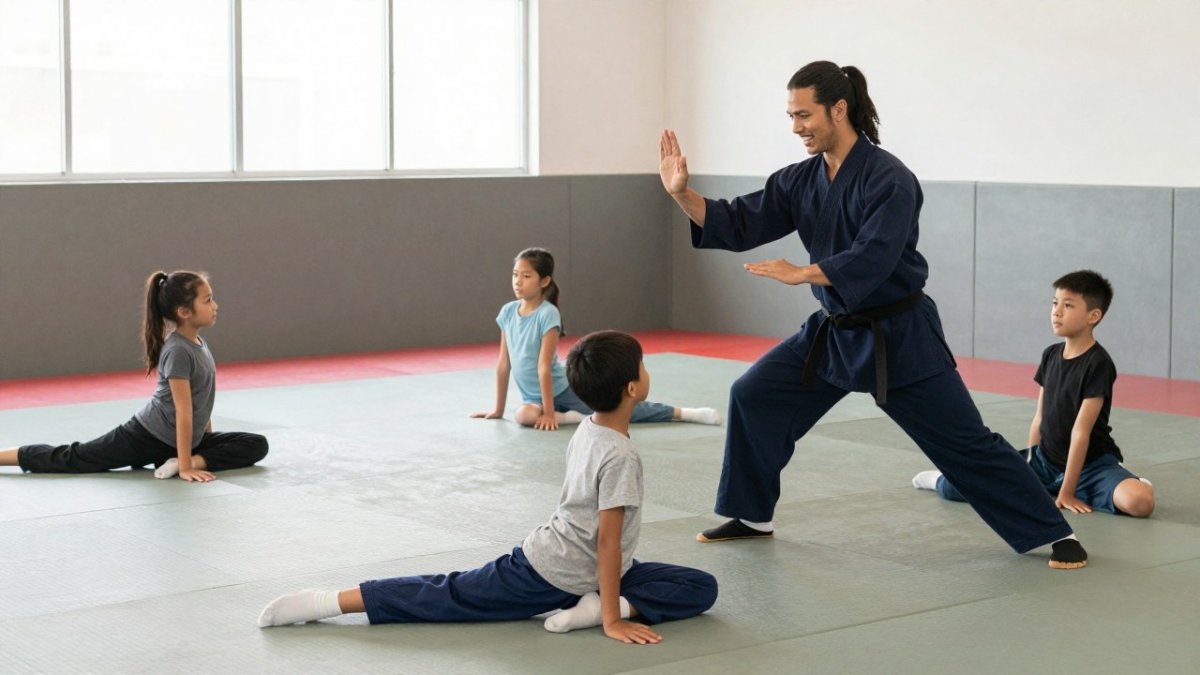
Traditional martial arts training commonly emphasizes etiquette, such as how to bow, how to address instructors and how to line up, as part of the training.
Don't expect to master anything in one session. The goal is to see how the class feels: whether the pace is manageable, whether the instructor explains things clearly, and whether you feel welcome among the other students.
The table below summarises what usually happens during a first class and what to focus on during it.
| Stage | What happens | Your focus |
|---|---|---|
| Greeting and warm-up | Opens with a greeting and warm-up | Follow the instructor's pace |
| Basic movements | Stances, basic movements or striking drills | Notice whether the pace is manageable |
| Partner work | Pairing near the end of class, or a review | See how you feel around other students |
| Etiquette | Bowing, addressing instructors, lining up | Learn the customs before you join |
| Overall goal | Evaluate the class, not master anything | Judge whether the class feels welcoming |
Questions to Ask Before Joining a Martial Arts School
The trial is not just a sample class. It is your only clean look at how the school operates before money changes hands. Treat it as an evaluation, and split your attention between what you ask and what you observe.
What to ask about training and progression. These questions are worth asking on the phone before you book, because the answers shape whether the school fits your goal:
- How are beginners grouped, and do they train with students of their own age and size?
- What does the typical progression from one rank or level to the next look like, and roughly how long does each step take?
- How do instructors modify drills for students with injuries, limited mobility, or a lower fitness baseline?
- What is the class size range, and what is the student-to-instructor ratio for the class I would attend?
- Is sparring required, optional, or introduced at a specific level?
What to ask about money and commitment. These are the questions schools are least likely to volunteer answers to:
- Is there a contract, and what is the minimum commitment?
- What is the cancellation and refund policy, and is there a notice period?
- Are testing fees, uniform costs, and equipment costs included in the monthly price or billed separately?
- What happens if I pause for an injury or a schedule change?
Accessibility and accommodations. If you or your child has a medical condition, a disability, a joint problem, or a language preference, raise it before the first class, not during it. A well-run school will ask follow-up questions and describe specific modifications. A school that dismisses the concern, or promises "we'll figure it out," is telling you how it will handle your needs later. The same applies to fitness level: ask whether the warm-up can be scaled, and whether the instructor is comfortable with a student who needs to sit out a drill.
How to compare answers across schools. Write down the answers from each trial in the same order, and compare them side by side. The school with the clearest answers on cancellation, fees, and beginner handling is usually the safer choice, even if its schedule is slightly less convenient. A school that is vague on any of the money questions is a school where you should read the agreement line by line before signing.
Booking Your Child's or Your Own First Trial at Dragon Claw Academy
Dragon Claw Academy offers structured, traditional Kung Fu training for kids, teens and adults. Our classes focus on discipline, physical skill and personal growth, with programs designed for each age group. When you book a trial, you can see how our instruction works in practice and decide whether it fits your goals.
To book, visit our website and choose the class that matches your age and experience. If you have questions about the schedule, the training or your child's readiness, call us before the class. Pricing depends on the program you choose, so please check our website or contact us directly for current rates.
Frequently Asked Questions
How do I book a martial arts trial class?
Most schools let you book a trial class through their website, by phone, or by email. Start by choosing the program that fits your age and goals, such as kids, teens, or adults. Then select an open class time that works for your schedule and give the school your name, contact details, and any relevant health information. Many schools confirm the booking by email or text. If you are unsure which class is right for a beginner, call ahead and ask the front desk to recommend one. Booking early helps you secure a spot, especially for weekend and after-school sessions.
Are martial arts trial classes free?
Many martial arts schools offer a free trial class or a discounted introductory package, but policies vary. Some schools offer one free class with no obligation, while others offer a short trial period for a set fee that may be credited toward membership if you enroll. Check the school's website or call to confirm exactly what is included before you book. Ask whether there is a sign-up fee, equipment cost, or uniform cost, since those can apply even when the trial itself is free. Get the terms in writing so there are no surprises.
What should I ask before booking a martial arts trial class?
Ask what style of martial arts the school teaches and whether the instructors have formal training in that style. Find out how classes are structured for beginners and whether there are separate programs for children, teens, and adults. Ask about class size, the instructor-to-student ratio, and how the school handles students who have injuries or physical limits. Also ask about the cancellation policy and whether the school requires a long-term contract. Clear answers to these questions help you judge whether the school is a good fit before you commit.
Can beginners join a martial arts trial class?
Yes. Trial classes are designed for people with no prior martial arts experience, and most schools expect beginners to attend. Instructors typically start with basic stances, movements, and warm-ups, then build gradually. You do not need to be in top physical shape, but you should wear comfortable athletic clothing and tell the instructor about any injuries before class starts. If you have never trained before, arrive a few minutes early so you can meet the instructor and ask any questions about what to expect.